
Echo Weaver glaive powers: Teleportation and Combat
Learn how Echo Weaver glaive powers support teleportation, combat, and lock interactions. Plan smarter routes and use the time loop to practice your moves.
Jump to
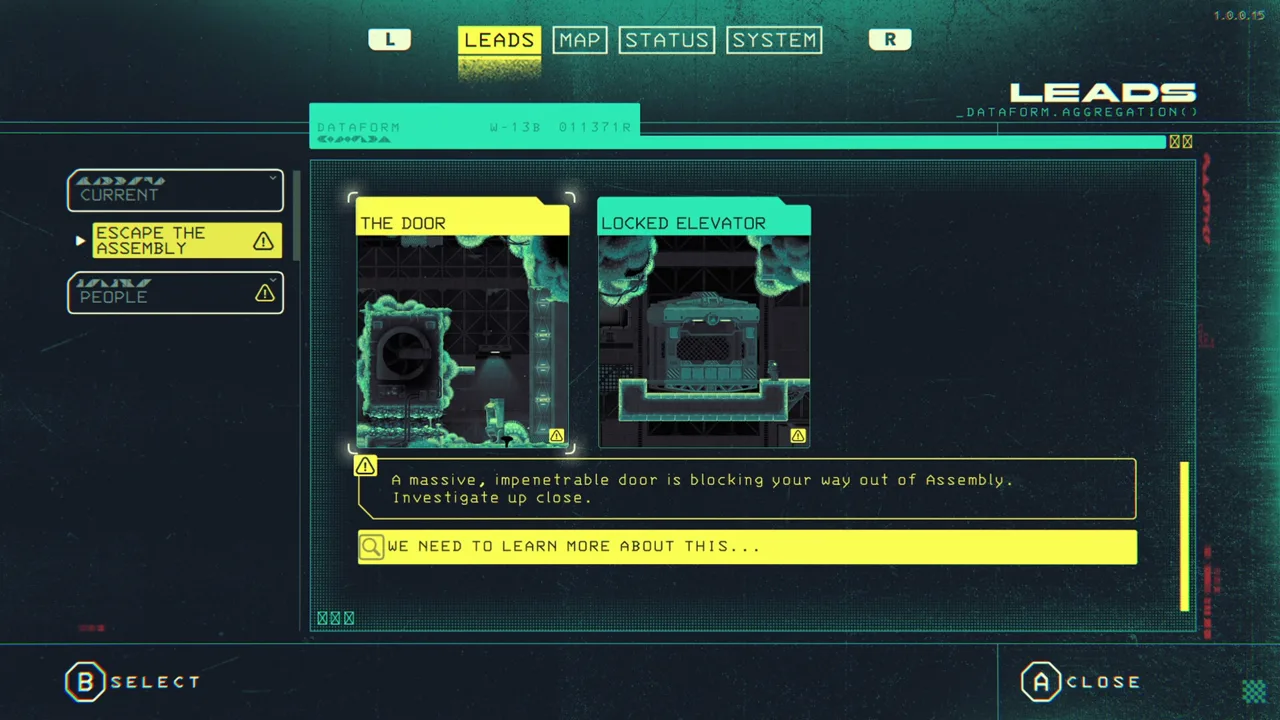
How the Glaive Works
A thrown weapon becomes a destination when you understand Echo Weaver glaive powers. That matters because traveling through Provenance consumes a limited time budget, and learning a useful route can change what you accomplish before the reset. Echo Weaver glaive powers connect combat, teleportation, and environmental interactions, giving you several reasons to reconsider a room you have already explored.
The glaive is an alien weapon bound to the Weaver. Its central movement mechanic is straightforward: you can throw it, then teleport directly to wherever it lands. It also serves as your primary weapon and can interact with locks.
Those functions belong to a game built around discovery. Echo Weaver presents its powers as capabilities you learn to understand, with secrets taking the place of conventional upgrades. A clue can therefore matter as much as a successful platforming sequence: it changes how you approach an obstacle.
| Glaive function | What it does | What to consider |
|---|---|---|
| Throwing | Sends the glaive away from the Weaver | Where the weapon lands |
| Teleportation | Moves the Weaver directly to the glaive’s landing location | Whether that destination helps your route |
| Combat | Lets the glaive destroy enemies | Whether fighting advances your current objective |
| Lock interaction | Allows the glaive to hack locks | Whether an encountered lock supports that interaction |
These are the concrete functions to build your understanding around. The weapon’s broader description mentions reality-bending powers, but that does not establish an unlimited teleport, a universal door-opening ability, or a specific set of damage upgrades.
A good approach is to separate what you have demonstrated from what you suspect. If a throw reaches somewhere useful, remember that landing point. If an interaction fails, keep it as an unanswered question rather than assuming the game requires a stronger weapon.
Official source: Echo Weaver (store.steampowered.com)
Use Teleportation to Reconsider Your Route
The movement value of Echo Weaver glaive powers comes from choosing a destination before committing to the trip. Instead of considering only the path your character can walk or jump through, look at where you can place the glaive.
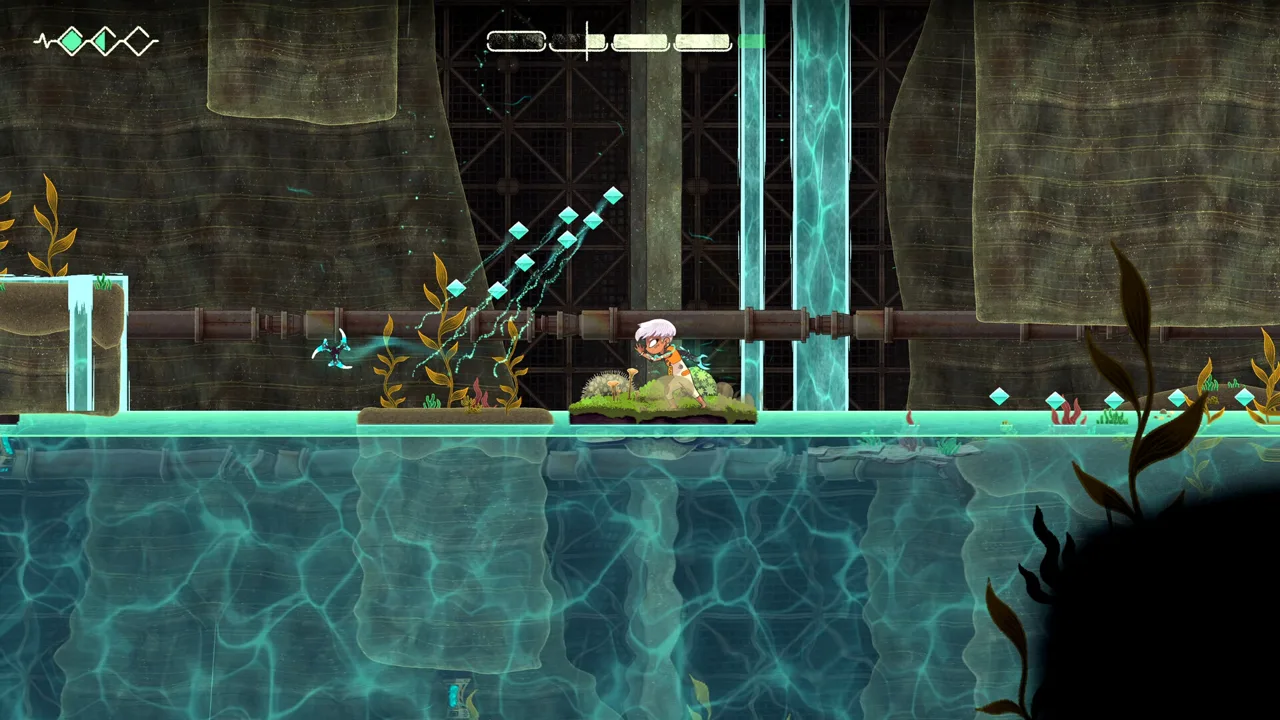 Image: Steam / Moonlight Kids
Start by identifying where you want to arrive. Then consider whether a throw can establish that destination. This gives your experiment a clear purpose: reaching a particular location, testing a possible shortcut, or reducing the amount of repeated platforming along a familiar route.
The Weaver also has double jumps, wall jumps, and a slide. Think of those movement options alongside teleportation. A jump might help you reach a useful throwing position, while a teleport might change where your next platforming sequence begins.
Choose the landing point before the throw
A useful practice habit is to inspect the intended destination before throwing. Consider the nearby terrain and hazards, along with what you will need to do after arriving.
Reaching a location and completing a route are different achievements. A landing point that gets you closer to an objective may still leave you with an awkward next move. During exploration, that is valuable information. During a carefully planned loop, it is something worth accounting for beforehand.
| Movement option | Established function | Suggested practice |
|---|---|---|
| Double jump | Provides an additional jump | Use it to explore available positioning |
| Wall jump | Supports movement from walls | Learn the sequence through a familiar section |
| Slide | Adds another movement option | Observe where it fits into your route |
| Glaive teleport | Moves you to the weapon’s landing location | Check the destination and your next move |
Compare routes by the time they leave you
The game rewards routing and rhythm. A good approach is to compare a familiar path with a newly discovered glaive route, paying attention to your remaining time at the same destination.
Avoid judging a shortcut only by how dramatic it looks. If you repeatedly miss the throw or arrive in a dangerous position, practice it before relying on it during a loop with another objective.
Echo Weaver glaive powers become easier to apply when you know both ends of the movement: where to throw from and what to do after teleporting. Treat that complete sequence as the thing you are learning.
Apply the Glaive to Combat and Locks
The glaive’s combat role sits inside the same time economy as exploration. Enemies can be destroyed with it, but fighting takes place while your loop is running down. Healing also draws from your available time.
 Image: Steam / Moonlight Kids
That makes the purpose of an encounter worth considering. Before engaging, ask whether the enemy is obstructing the route you intend to take or whether you are stopping to experiment with combat.
For a loop devoted to learning, practicing an encounter can be worthwhile. For a loop devoted to reaching a known destination, a good approach is to keep your attention on the encounters relevant to that route.
There is no established damage chart here, so you should not plan around an assumed number of hits, a particular attack bonus, or an undocumented combat interaction.
Give lock interactions their own attention
Echo Weaver glaive powers also include hacking locks. That makes the weapon relevant to environmental problem-solving, beyond its use against enemies.
However, the ability to hack locks does not mean every closed passage responds to the glaive. The game also includes gates and routes connected to spending time or understanding the loop. Treat the obstacle in front of you as a specific problem.
If you suspect a lock supports a glaive interaction, testing that possibility is a reasonable exploration goal. Observe the result before adding it to your route plan.
| Situation | Relevant mechanic | Suggested approach |
|---|---|---|
| An enemy obstructs your intended path | The glaive can destroy enemies | Practice that encounter as part of the route |
| You need to recover health | Healing consumes time | Consider how the cost affects your remaining objective |
| You encounter a lock | The glaive can hack locks | Test whether that particular lock responds |
| A passage remains inaccessible | Progress depends heavily on knowledge | Look for clues before assuming a missing upgrade |
Keep conclusions narrow. Successfully opening one lock establishes that interaction; it does not establish a rule for every barrier in Provenance. This habit helps you build a route from demonstrated mechanics rather than assumptions.
Understand Why Time Changes the Glaive’s Value
Echo Weaver glaive powers matter because the loop itself is a resource. The timer counts down, pickups can extend it, and activities such as healing, trading, and opening routes can consume it.
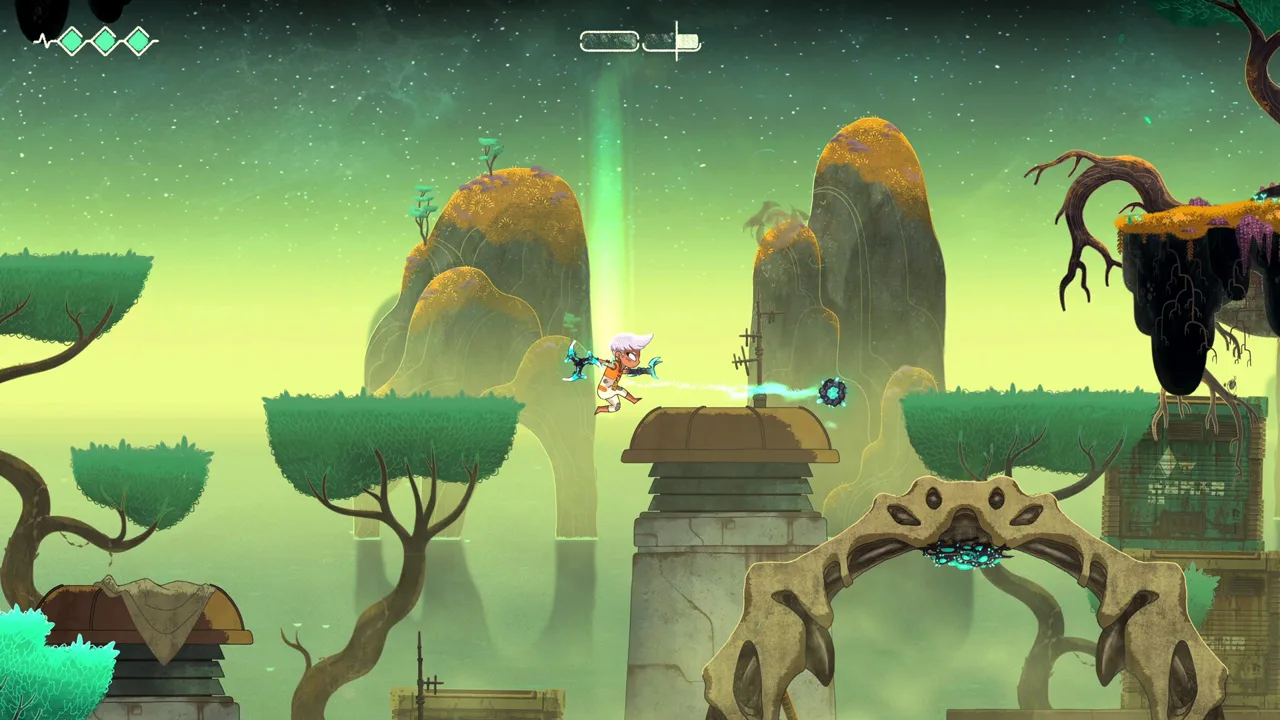 Image: Steam / Moonlight Kids
When time runs out, another cycle begins. The useful lesson from an unsuccessful attempt might be a discovered landing point, a gate’s timing, or a clearer understanding of how to reach an objective.
One early obstacle illustrates the pressure: a gate costs three time segments to pass, taking more than half of the available supply described at that point. Elsewhere in the review’s account, a gate closes 10 seconds after a loop begins, while the observed journey to it takes roughly a minute.
Those examples show why repeating the same approach can leave you stuck. A time-sensitive obstacle calls for another look at the route and the information available to you.
| Time mechanic | What it means for exploration | Suggested response |
|---|---|---|
| The timer continually decreases | Travel and investigation use the loop’s remaining duration | Give the loop a clear objective |
| Pickups extend the loop | Exploration can reveal additional time resources | Remember pickups relevant to your route |
| Healing, trading, and routes can cost time | Time is also something you spend | Account for necessary costs before setting out |
| A reset begins another cycle | You can revisit a problem with what you learned | Change the next attempt based on a specific discovery |
Distinguish an information problem from an execution problem
Before practicing a difficult sequence repeatedly, consider whether you understand the obstacle.
If you know the route and keep missing a movement, focused practice is sensible. If you do not know how a gate’s timing can be met, faster inputs alone may leave the underlying question unanswered.
Echo rifts provide fragments of information, including lore connected to research into the glaive. NPC conversations also help you understand the world and the people trapped within it.
By default, time pauses during dialogue, although that pause can be disabled in the settings. If your dialogue pause is enabled, use that opportunity to read carefully. A clue deserves attention before you commit another loop to the same unresolved route.
Build a Practice Loop Around One Question
A productive way to learn Echo Weaver glaive powers is to give each attempt a question you can answer. “Can this landing point help me reach that area?” is more useful than trying to solve every nearby obstacle at once.
This approach follows the game’s emphasis on knowledge and route optimization. Your practice has a purpose, and the next attempt can build on a clear observation.
Start with a limited objective
Choose a task such as:
- Finding a usable landing point for a teleport.
- Testing an encountered lock interaction.
- Practicing an enemy encounter on a known route.
- Checking whether a shortcut leaves you more time.
- Reading an echo rift connected to an unresolved question.
These are suggested practice goals, not required progression steps. Choose the one that matches what is currently blocking you.
Change the part you are investigating
Once you have a route that reaches the area, a good approach is to keep that opening sequence familiar while testing the uncertain part.
For example, if your question concerns a glaive landing point, concentrate on the throw and arrival rather than adding unrelated exploration along the way. That makes it easier to understand what helped and what still needs work.
When a test succeeds, practice the follow-up movement too. A useful teleport needs to fit into the rest of your journey.
Revisit familiar rooms after a discovery
Understanding Echo Weaver glaive powers can give an old room a new purpose. A platform you previously ignored may become a possible destination, while a lock may become worth examining more closely.
Keep the discovery specific: where you stood, where the glaive landed, what happened after teleporting, and how the sequence affected your remaining time. Those observations give you something concrete to reproduce.
The next time you enter that room, you can arrive with a plan built from what you learned.
FAQ
What are the main Echo Weaver glaive powers?
The glaive can be thrown, used to destroy enemies, and used to hack locks. Its central traversal ability lets the Weaver teleport directly to wherever the thrown weapon lands. Learning how those functions interact with the world is part of progression.
Do glaive powers require conventional upgrades?
Echo Weaver describes progression as learning secrets and understanding powers already at your disposal. Expect discoveries about how to use your capabilities rather than a conventional sequence of weapon upgrades. That premise does not provide a specific acquisition walkthrough or unlock order.
Can the glaive open every locked passage?
You should not assume so. The glaive can hack locks, but the game also includes time costs, timed obstacles, and routes that depend on knowledge. Test individual interactions and use clues to understand passages that remain inaccessible.
How should I practice glaive teleportation?
A good approach is to choose a clear landing point, test the throw, and observe your position after teleporting. Then practice the next movement in the route. Once the sequence feels consistent, compare it with your familiar path by checking the time remaining at the same destination.
Continue with
 Echo Weaver metroidvania game: Time Loop MechanicsExplore the Echo Weaver metroidvania game with a spoiler-light guide to time loops, knowledge-based abilities, glaive movement, and smarter route planning.
More in Mechanics
Echo Weaver gameplay: Time Loops, Secrets, and Tips
Explore Echo Weaver gameplay, from time loops and glaive puzzles to movement and lasting discoveries. Learn how to plan routes and make each reset count.
Echo Weaver progression: Master Secrets and Time Loops
Learn how Echo Weaver progression works, what survives each reset, and how secrets, movement, and smarter routes help you make the most of every time loop.
Echo Weaver time loop: How Resets and Progress Work
Learn how the Echo Weaver time loop works, what survives resets, and how bells, time crystals, and hidden abilities help you plan a smarter route forward.
Join the community
Official channels for news, updates and player help: