
Echo Weaver gameplay: Time Loops, Secrets, and Tips
Explore Echo Weaver gameplay, from time loops and glaive puzzles to movement and lasting discoveries. Learn how to plan routes and make each reset count.
Jump to
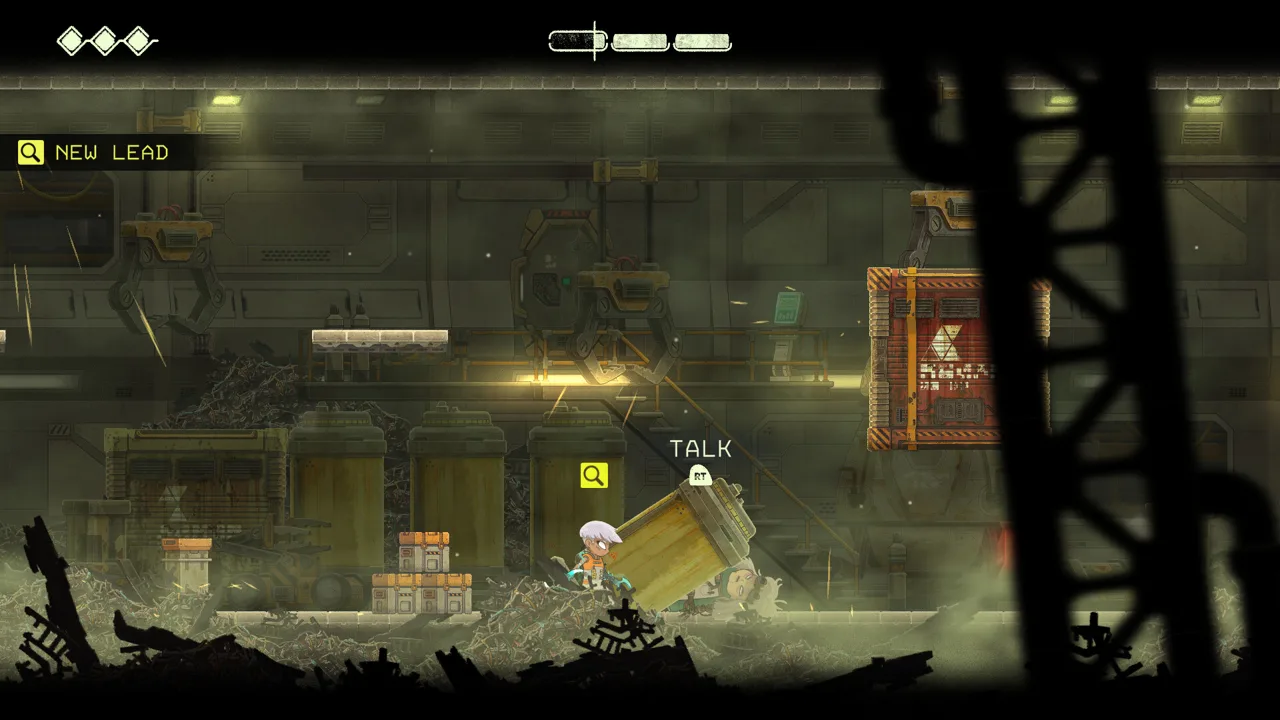
Your Next Breakthrough Could Be a Secret
A familiar dead end can become a shortcut once you understand what your character could already do. Echo Weaver gameplay makes that discovery matter because every route competes for a limited supply of time. Understanding Echo Weaver gameplay means learning how movement, puzzles, and a repeating world fit together, so each reset gives you a clearer plan.
Developed by Moonlight Kids, this knowledge-based Metroidvania combines an interconnected map with a time loop. You explore the ruins of Provenance, investigate its survivors, and uncover techniques that change how you travel. The central reward is understanding: a newly learned action can make an old obstacle look entirely different.
What “metroidbrainia” means for progression
In a traditional Metroidvania, reaching an inaccessible area often requires collecting an upgrade elsewhere. Echo Weaver frequently places that barrier in your understanding of the character’s existing abilities.
That distinction changes how you should approach a blocked route. You may need a clue about a technique, a better understanding of your glaive, or information about the world’s timing.
| Progression element | How it works | A useful player response |
|---|---|---|
| Traversal abilities | Many become usable through discovering how to perform them | Reconsider earlier obstacles after learning a technique |
| World knowledge | Clues reveal routes, events, and possible solutions | Connect discoveries across different areas |
| Map exploration | Map progress survives resets | Use mapped territory to plan another attempt |
| Execution | Familiar movements can be practiced across loops | Refine a route before adding more objectives |
The important qualification is that the opening tutorial has some restrictions. Launch-period impressions describe certain abilities as unavailable until that introduction is completed. Treat the broader knowledge-based design as the governing principle without assuming every technique works immediately during the opening.
A good approach to Echo Weaver gameplay is to ask what information you lack before assuming you need another collectible. A puzzling barrier may become understandable after a conversation or a glimpse into the past.
Official source: Echo Weaver (store.steampowered.com)
How the Time Loop Shapes Every Decision
The clock governs exploration, but it also functions as a resource you can spend. The official game description identifies healing, trading, and opening routes as uses for your remaining time.
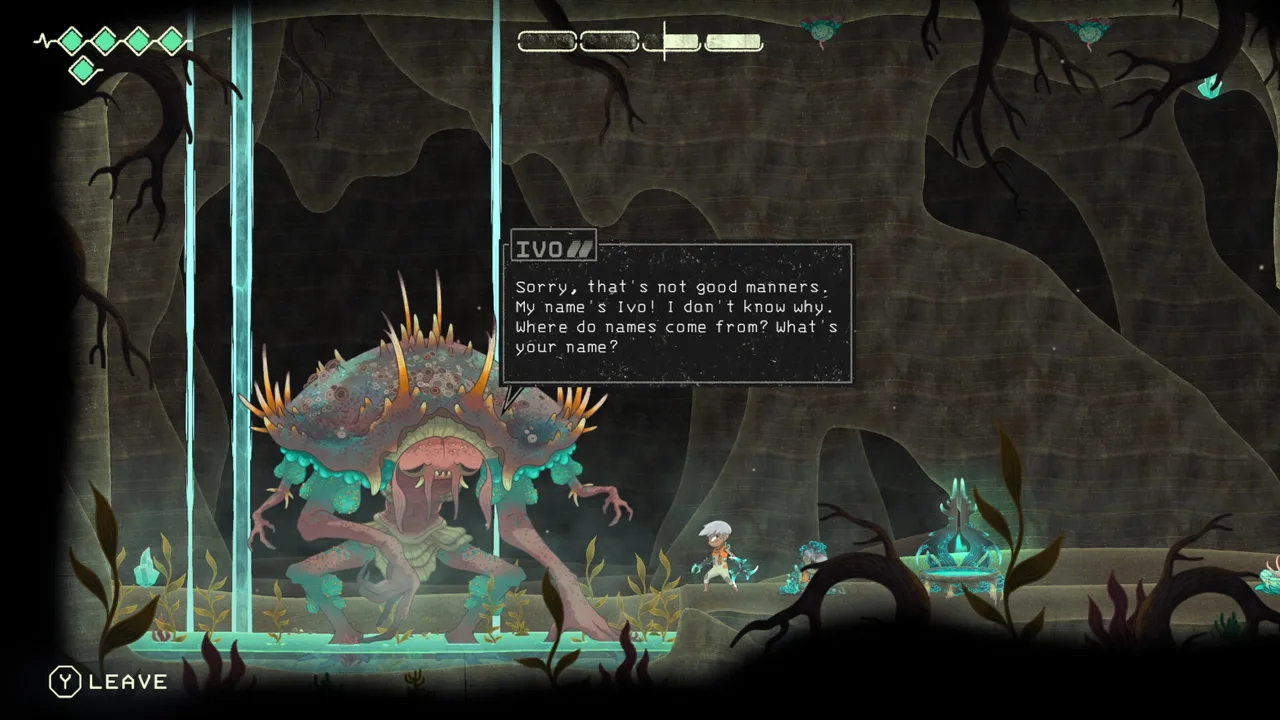 Image: Steam / Moonlight Kids
That creates a practical tension. Spending time may solve an immediate problem while leaving less room for the journey afterward. A route that looks efficient on the map can still be expensive once those interactions are included.
Crystals found around the world extend your available time, and some collectibles increase the time you start with in later loops. The maximum extended loop is 13 minutes. That ceiling should not be confused with your starting allowance: extending a loop and improving its initial duration are separate considerations.
| Time mechanic | Confirmed behavior | Planning implication |
|---|---|---|
| Loop reset | The repeating cycle sends you back to start over | Plan around repeat attempts |
| Time pickups | Collectibles can extend the current loop | Consider pickups along your intended route |
| Starting allowance | Some collectibles increase the time available at a loop’s beginning | Those discoveries can improve future attempts |
| Maximum duration | A loop cannot be extended beyond 13 minutes | Build routes that respect the ceiling |
| Time spending | Time can be used for healing, trading, and opening routes | Budget for interactions as well as travel |
What survives a reset?
Your map progress remains, along with everything you have learned. That makes an unsuccessful attempt potentially useful even when you fail to finish its objective.
Perhaps you discover a shorter path, understand a puzzle interaction, or learn when a door closes. Each finding can inform the next attempt. Do not assume that every completed character interaction or temporary world change persists; keeping map information and knowledge does not establish that all quest actions carry over.
For Echo Weaver gameplay, a useful early habit is separating investigation from execution. Spend an attempt understanding an unfamiliar area, then return with a focused objective. You still face the timer, but you give yourself a clearer way to judge whether the trip helped.
The pressure can feel different depending on what you are doing. Repeating a known route supports improvement. Running out of time while deciphering an unfamiliar puzzle can feel frustrating, especially when you were close to understanding it.
The Glaive Connects Puzzles, Movement, and Discovery
Your alien glaive is central to interacting with the world. It behaves like a thrown, returning weapon and is used primarily for puzzles, although it can also damage enemies.
 Image: PlayStation Store
Combat exists, but the available gameplay descriptions emphasize relatively few enemies and a much stronger focus on exploration, traversal, and problem-solving. Learning how the glaive interacts with an obstacle therefore deserves more attention than treating every room as a combat encounter.
Its powers also participate in the game’s knowledge-based progression. Discovering another use can change what you consider possible in areas you have already visited.
The satisfying part is the reach of that discovery. Understanding an interaction in one location may give you a reason to reconsider several other locations.
| Situation | What deserves attention | Suggested approach |
|---|---|---|
| A puzzle resists an obvious throw | The glaive has additional powers to discover | Follow clues about its behavior |
| A barrier seems impossible to cross | Existing abilities can reveal overlooked solutions | Revisit after learning a relevant technique |
| A destination takes too long to reach | Knowledge can expose hidden shortcuts | Reassess familiar territory |
| Enemies interrupt exploration | The glaive can be used to attack | Deal with the interruption, then resume investigating |
Echo Weaver gameplay rewards connecting those uses rather than thinking of each discovery as an isolated trick. A technique that helps with one puzzle may also affect access or routing elsewhere.
A useful tip is to test a newly learned action somewhere familiar before relying on it during a complicated trip. Practice can help you understand what the action requires while keeping the surrounding route predictable.
There is a reason to avoid reading a complete ability list too early. Discovering how those powers work is a substantial part of the game’s progression. If you need help, looking for a narrow hint about the current obstacle may preserve more of that experience than studying every technique in advance.
Movement Mastery Makes the Map More Manageable
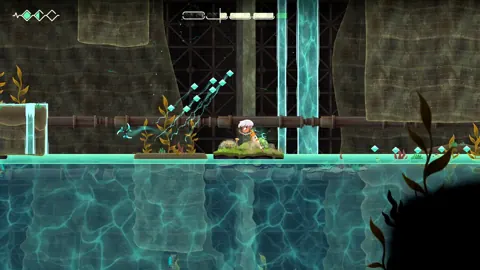
Movement is the link between knowing what to do and reaching the place where you can do it. Echo Weaver pairs precise platforming with a character that has some weight, then expands your options as you discover additional techniques.
 Image: Steam / Moonlight Kids
Later movement includes sliding for speed and slingshotting through the environment. The exact inputs and procedures are discoveries themselves, so a general gameplay guide should not replace them with guessed controls.
Instead, focus on how a movement technique changes a route. Does it help you maintain speed through a familiar section? Does it make a previously awkward passage easier to navigate? Can you apply it consistently enough to depend on it during an objective run?
Practice the route, then expand it
A good approach is to work on a troublesome section before attempting a longer sequence. Learning an action and using it reliably are different tasks.
Consider these practice priorities:
- Understand the action. Make sure you know what the discovered technique requires.
- Apply it to familiar terrain. Use a known section to assess how it changes your movement.
- Connect it with another action. Explore combinations as you become comfortable.
- Revise your route. Account for the paths your improved execution makes practical.
These are suggested practice habits rather than required progression steps.
Echo Weaver gameplay also includes time trials that test both platforming execution and route planning toward a plinth. They give you a focused reason to experiment with speed and efficiency.
The game’s emphasis on rhythm and routing does not eliminate demanding platforming. Some challenges can still feel difficult or unforgiving. If a sequence repeatedly breaks down, a useful response is to identify the troublesome transition and practice it with fewer competing goals.
A faster route is valuable when you can repeat it. Consistency gives you more room to think about the puzzle or character interaction waiting at the destination.
Plan Loops Around Clues, Characters, and Shortcuts
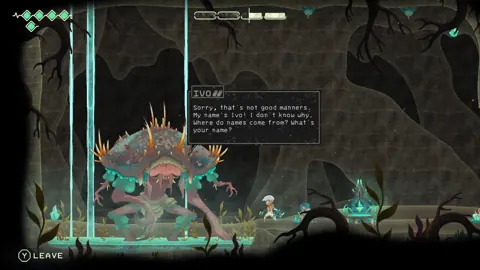
The ruined world holds more than movement challenges. Conversations, memories, and character quests help you investigate what happened to Provenance and why the cycle continues.
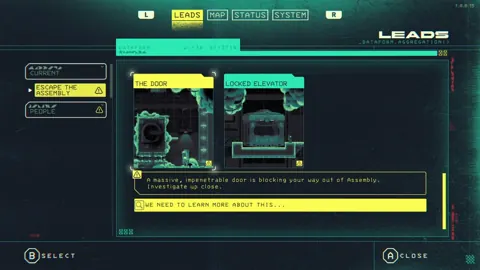
Your companion, Intrepid, helps track the threads you are following between loops. Quest and lead menus provide another way to revisit unresolved questions. They can be useful when the map offers several destinations and you are unsure which clue to pursue.
Characters also connect story discovery with practical information. Learning about someone’s situation may point you toward another objective or help explain something you encountered elsewhere.
A good approach is to give an attempt a clear purpose while leaving room for an unexpected clue.
| Intended purpose | What to focus on | A useful outcome to look for |
|---|---|---|
| Investigate a clue | A conversation, memory, or unresolved lead | A clearer question or possible destination |
| Understand a puzzle | Its obstacle and relevant ability information | A more specific idea to test |
| Improve a route | Shortcuts, hazards, and travel efficiency | A path you can repeat more confidently |
| Pursue a character objective | Known requirements and available time | Progress toward that objective |
| Practice a time trial | Movement execution and route choice | A more consistent attempt |
Learn the world’s schedule
Some routes depend on timing, including doors that close during the loop. Reaching the correct location can therefore require both navigation knowledge and an understanding of when access changes.
If you arrive too late, treat the timing as information for another attempt. An editorial tip is to prioritize that destination earlier next time or investigate whether a shortcut changes the journey. Avoid assuming a universal schedule; learn the behavior of the specific route.
For Echo Weaver gameplay, replaying familiar territory becomes more purposeful as those details accumulate. You can connect character objectives, newly understood abilities, and alternate paths into a more deliberate sequence.
Before beginning another loop, review your strongest unresolved lead. Choose a destination, consider the time it may require, and decide what you want to learn there. Even when the attempt falls short, a concrete answer can make the following trip easier to plan.
FAQ
What is the main focus of Echo Weaver gameplay?
Echo Weaver gameplay centers on exploring an interconnected world, discovering how existing abilities work, solving puzzles, and planning routes within a repeating time loop. Movement and knowledge drive much of your progress.
How long can an Echo Weaver time loop last?
An extended loop can last no longer than 13 minutes. Collectibles can add time during a loop, while some increase your starting allowance in later loops. The maximum duration is not necessarily the amount you begin with.
Do you lose everything when the loop resets?
No. Your map progress remains, and you retain your knowledge of abilities, clues, shortcuts, and world behavior. That does not mean every temporary action or character objective is preserved across resets.
Does Echo Weaver have combat?
Yes. The glaive can damage enemies, but it is primarily a puzzle tool, and enemy encounters are relatively sparse in the gameplay descriptions. Exploration, platforming, and understanding the loop receive more emphasis.
Continue with
 Echo Weaver glaive powers: Teleportation and CombatLearn how Echo Weaver glaive powers support teleportation, combat, and lock interactions. Plan smarter routes and use the time loop to practice your moves.
More in Mechanics
Echo Weaver metroidvania game: Time Loop Mechanics
Explore the Echo Weaver metroidvania game with a spoiler-light guide to time loops, knowledge-based abilities, glaive movement, and smarter route planning.
Echo Weaver progression: Master Secrets and Time Loops
Learn how Echo Weaver progression works, what survives each reset, and how secrets, movement, and smarter routes help you make the most of every time loop.
Echo Weaver time loop: How Resets and Progress Work
Learn how the Echo Weaver time loop works, what survives resets, and how bells, time crystals, and hidden abilities help you plan a smarter route forward.
Join the community
Official channels for news, updates and player help: