
Echo Weaver review: Smart Secrets, Demanding Time Loops
This Echo Weaver review explores knowledge-based upgrades, time loops, tough platforming, and replay appeal. See whether its mysteries suit your playstyle.
Jump to

A Metroidvania Where Understanding Opens the Map
A blocked route can become a shortcut the moment you understand a move you already possess. This Echo Weaver review examines why that discovery makes Moonlight Kids’ time-loop adventure so compelling—and why its clock can also frustrate. If you’re weighing a purchase, this Echo Weaver review centers on a practical question: do you enjoy solving mysteries while a reset approaches?
Echo Weaver builds its exploration around a compelling idea: learning how the world works is a form of character progression. Your growing understanding of movement, shortcuts, and events lets you accomplish more within repeated visits to the same interconnected landscape.
That approach gives familiar Metroidvania exploration a different rhythm. A confusing room might contain the clue that changes how you approach several earlier obstacles. A conversation might suggest where to go next, while an efficient route leaves more time to investigate once you arrive.
| Game detail | Information |
|---|---|
| Developer | Moonlight Kids |
| Publisher | Akupara Games |
| Release date | October 8, 2026 |
| Platforms | PC, PlayStation 5, Xbox Series X/S, Switch 2 |
| Steam operating systems | Windows and macOS |
| Format | Single-player, knowledge-based Metroidvania |
| Controller support | Full controller support on Steam |
The appeal lies in connecting those discoveries yourself. Echo Weaver asks you to remember, experiment, and reconsider familiar spaces. Players comfortable with uncertainty have a compelling reason to investigate; players who prefer clearly marked objectives should pay attention to its potential for aimless wandering.
Secrets Make Familiar Obstacles Feel Different
The central distinction in this Echo Weaver review is how abilities become useful. Conventional Metroidvanias often award a new traversal tool after a milestone. Here, many powers are already available before you understand how to perform them.
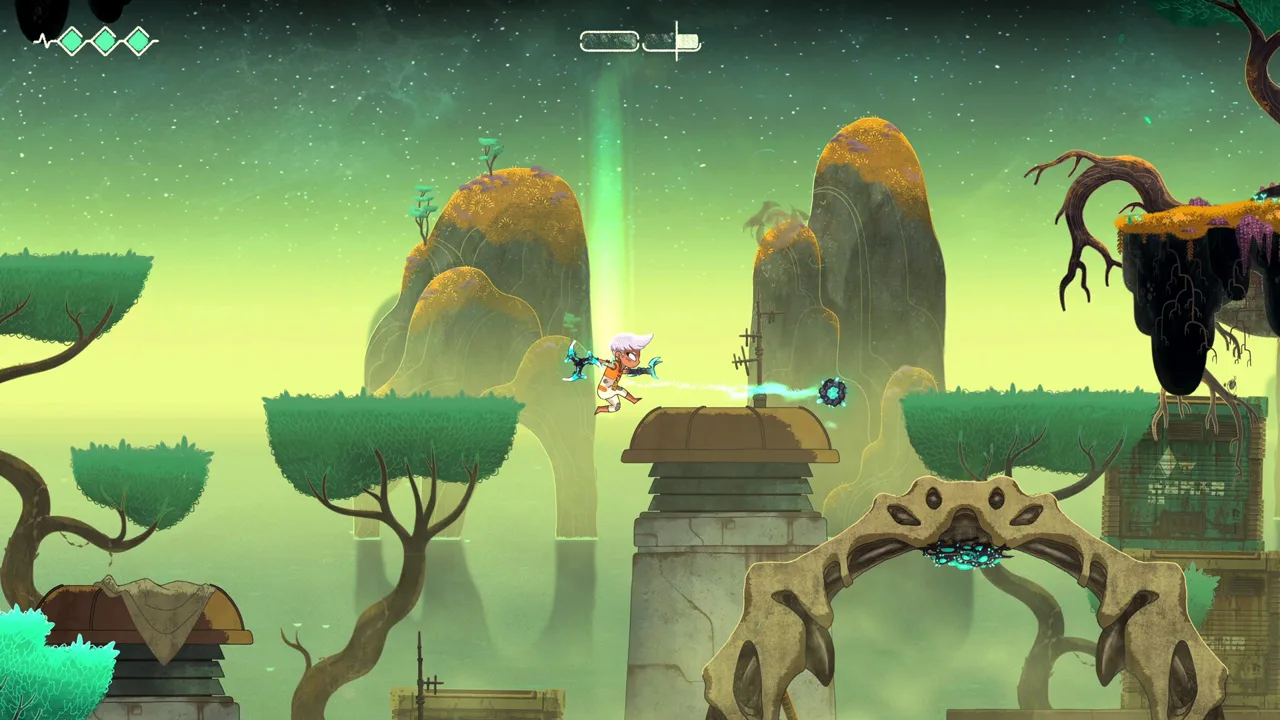 Image: Steam / Moonlight Kids
The discovery changes your options immediately. You can reconsider an obstacle, test a different route, or recognize that a previously lengthy journey has a faster solution. Progress becomes something you can carry into a new playthrough through memory.
Echo Weaver’s glaive is central to that process. It supports puzzle solving and unusual powers, with combat occupying a smaller role. Enemies exist, but Game Informer describes relatively few encounters. Exploration and understanding carry more of the experience than repeatedly clearing hostile rooms.
| Design element | How it affects exploration |
|---|---|
| Abilities learned through discovery | New knowledge can make earlier obstacles manageable |
| Interconnected map | Familiar areas can gain new relevance after a revelation |
| Hidden shortcuts | Understanding an existing route can preserve time for exploration |
| Glaive powers | Experimentation supports puzzle solving and obstacle navigation |
| Persistent map progress | A reset preserves your record of explored territory |
The attraction goes beyond getting through a locked path. Learning a technique can change your entire approach to traveling through the world. That gives discoveries consequences beyond the room where they occur.
There is a qualification to the premise. Noisy Pixel noted that some abilities remained restricted until completion of the tutorial during a second playthrough. Its reviewer described this as a brief early-game inconsistency, with much of the learned movement still usable.
A good approach is to avoid assuming every remembered technique works immediately during the introduction. Once exploration opens up, testing familiar movements against old obstacles follows directly from the game’s knowledge-based design.
For a first run, preserving those discoveries is part of the appeal. Looking up every technique could remove the very moments that make the progression distinctive.
The Time Loop Creates Momentum—and Interruptions
Any Echo Weaver review needs to treat the timer as a central consideration. The loop determines how long you can pursue a lead before the world resets, making route planning part of everyday exploration.
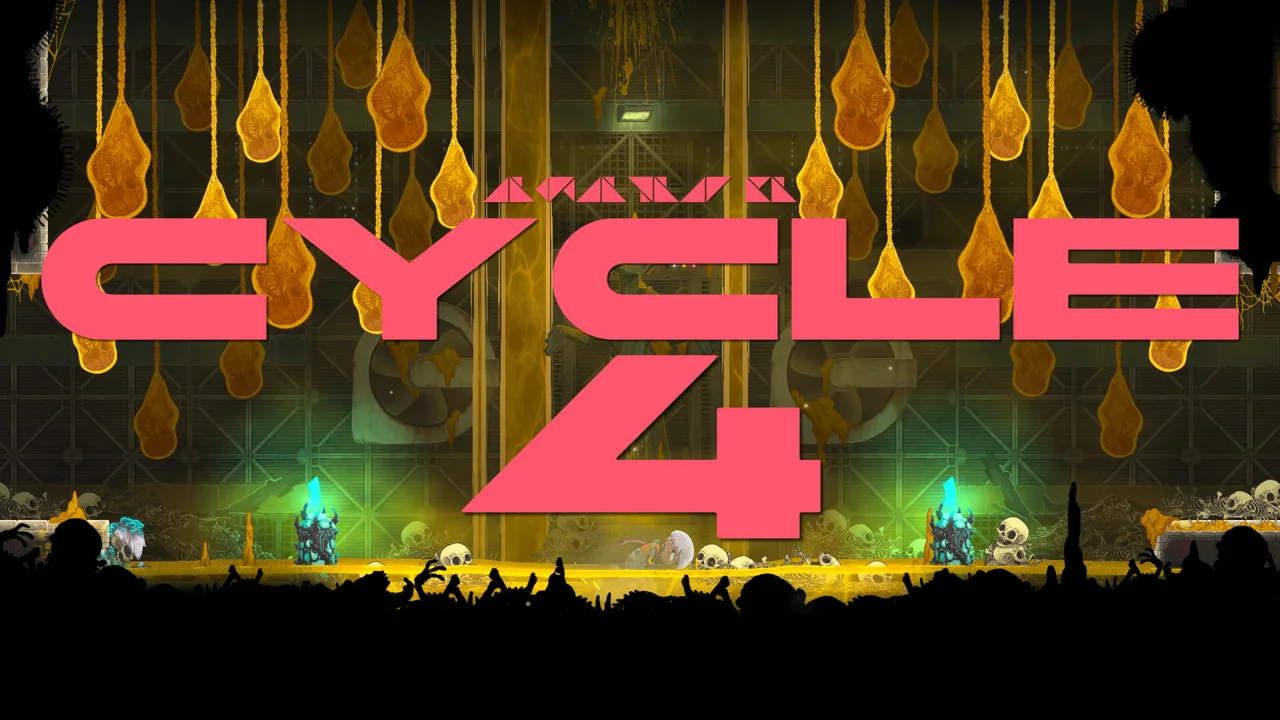 Image: Steam / Moonlight Kids
According to Noisy Pixel, collecting crystals can extend the current loop, while certain collectibles increase the time available at the beginning of future loops. A loop cannot exceed 13 minutes. You have unlimited attempts, so a failed plan can become preparation for the next run.
Time also serves as a resource beyond the countdown. The Steam description identifies healing, trading, and opening routes as uses for it. That creates decisions about how to spend the same resource you need for exploration.
The structure supports focused goals. Investigating one passage, testing one movement technique, or learning when a door closes can give a short session a clear purpose. Even when the environment resets, the information remains useful.
| Situation | A practical approach |
|---|---|
| A distant area takes too long to reach | Look for shortcuts and reconsider routes using learned abilities |
| A door closes during the loop | Pay attention to its timing and plan an earlier visit |
| A puzzle remains unclear | Use an attempt to test a specific idea rather than forcing completion |
| Several leads compete for attention | Review the tracked quests and choose one question to investigate |
| A route contains difficult platforming | Practice the movement before combining it with other objectives |
These are planning suggestions, not guaranteed solutions. Their value comes from separating discovery from execution: learning a route can be worthwhile even before you complete its associated task.
The pressure will land differently depending on your temperament. Noisy Pixel found the short loops engaging and appreciated returning for another attempt. Game Informer found resets more frustrating when puzzles stalled progress or the countdown interrupted an investigation.
Both reactions make sense. A timer can give a successful plan momentum, but it can also cut short a promising thought. Unlimited retries address the possibility of running out of attempts; they do not automatically remove the irritation of retracing a route.
If you dislike timed exploration, consider that concern carefully. The loop is woven into the game’s design, so its appeal depends partly on whether repeated attempts feel like useful experiments to you.
Movement Gives the Mystery Its Rhythm
Movement and storytelling belong together in this Echo Weaver review because both determine what you can accomplish during a loop. Faster travel creates room for conversations and investigation, while new information gives you reasons to revisit particular places.
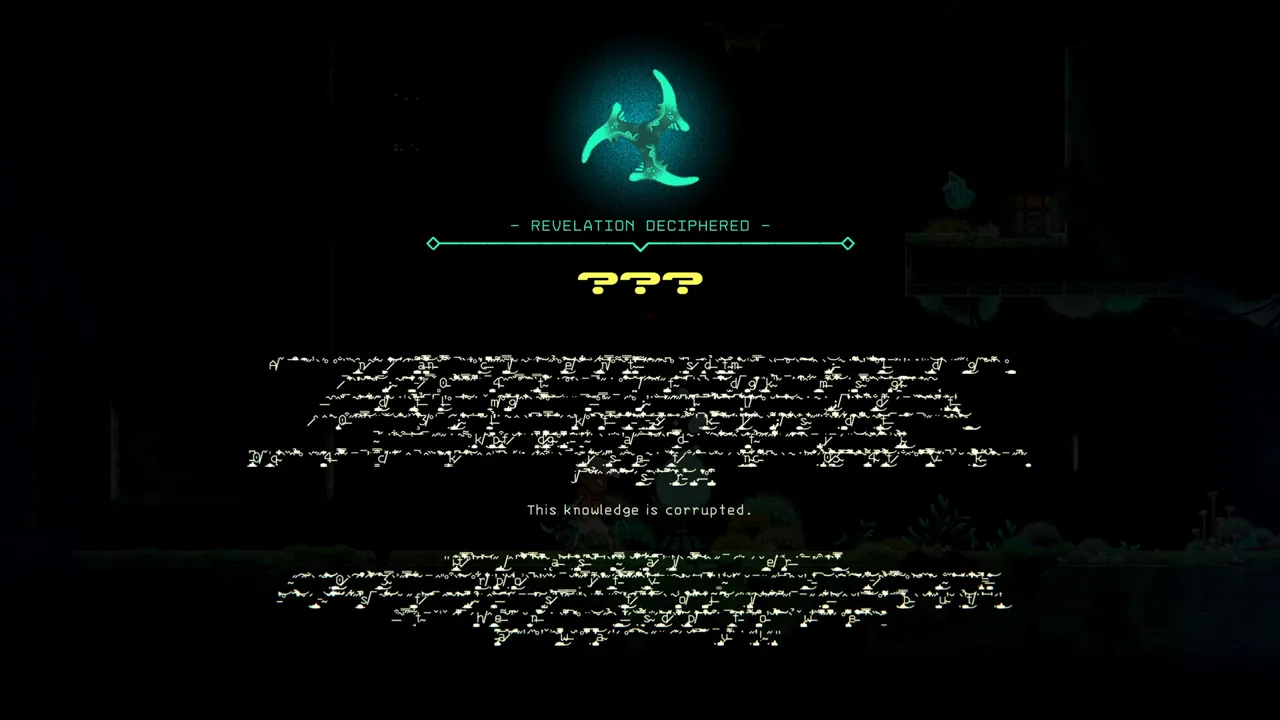 Image: Steam / Moonlight Kids
Noisy Pixel praised controls that balance precision with a sense of weight. Its reviewer described increasingly fluid traversal as learned techniques came together, including sliding for speed and slingshotting through the map.
Time trials give that movement a dedicated challenge. They test both execution and the route you choose to reach a destination. Learning where to go and performing the necessary moves become closely linked.
The praise comes with a meaningful counterpoint. Game Informer found that some platforming challenges occasionally felt unfair. Moonlight Kids’ Steam description emphasizes rhythm and routing, but that framing should not be mistaken for a promise of effortless execution.
A good approach is to practice a troublesome passage independently before making it part of an ambitious loop. The repeatable structure gives you room to learn hazards, refine movement, and try again with a clearer plan.
A World Worth Asking Questions About
You begin as a Weaver escaping containment and investigating a damaged world. Intrepid, a companion introduced early, helps track the threads you follow between loops.
The larger mystery concerns the Weavers, the repeating cycle, and the events that left the world in its current state. Encounters with survivors and glimpses into the past gradually expand that picture.
Characters serve more than an informational purpose. Learning their circumstances gives individual tasks emotional weight, while their knowledge connects those personal concerns to the wider mystery.
Noisy Pixel praised the cast and found the story’s conclusion satisfying. Its reviewer also remained interested in discovering more afterward. That supports the narrative’s appeal without establishing any particular number of endings or guaranteeing that every unanswered question requires another run.
The sensible advice is to keep conversations and tracked leads in mind alongside the map. In a game built around understanding, a character’s information can matter as much as recognizing a new passage.
Verdict: A Compelling Design With Real Friction
The conclusion of this Echo Weaver review depends on how you respond to discovery under pressure. Its strongest ideas reinforce one another: learned techniques improve traversal, efficient routes create exploration time, and that exploration produces further understanding.
Published reviews agree on the strength of discovery while differing substantially on frustration.
| Publication | Review score | Main emphasis |
|---|---|---|
| Noisy Pixel | 9.5/10 | Strong praise for discoveries, movement, characters, and replay appeal |
| Game Informer | 7.75/10 | Rewarding exploration tempered by timer pressure, wandering, and platforming frustrations |
Those scores are individual critical assessments, not a measure of community consensus. Their differences help identify the purchase decision: the same repeated exploration that encourages experimentation can feel burdensome when progress stalls.
Replay appeal follows naturally from the design. Remembered techniques and routes can change how you approach another run. Noisy Pixel had already started a second playthrough, while Game Informer found that possibility enticing without expecting to return immediately.
You can use these questions to weigh the fit:
- Do you enjoy discovering mechanics through clues and experimentation?
- Does repeating a route to improve it sound satisfying?
- Can you tolerate uncertainty while several leads remain unresolved?
- How strongly does a countdown affect your enjoyment of exploration?
For players drawn to the knowledge-driven discoveries of Outer Wilds and the traversal focus associated with Ori and the Blind Forest, Echo Weaver presents an intriguing combination. Those comparisons describe its influences, not an identical experience.
The final recommendation in this Echo Weaver review is to approach it for the pleasure of figuring things out. Its design gives understanding lasting value, but asks for patience when clues, execution, or time get in the way.
A demo is listed on Steam, offering a practical opportunity to assess the controls and exploration style. Visit the Echo Weaver Steam page for the game and demo listing.
FAQ
What is the main takeaway from this Echo Weaver review?
Echo Weaver makes learned techniques, world knowledge, and route planning central to progression. Its discoveries earned strong critical praise, while timer interruptions and challenging platforming drew more mixed reactions.
How long can an Echo Weaver time loop last?
Noisy Pixel reports a maximum loop length of 13 minutes. Crystals can extend the current loop, and certain collectibles increase your starting time in subsequent loops.
Does Echo Weaver preserve anything after a reset?
Game Informer states that map progress persists. Your understanding of abilities, clues, and routes also remains useful, letting you approach later attempts with more information.
Is Echo Weaver primarily a combat game?
Combat is present, and the glaive can attack enemies, but Game Informer describes relatively few enemy encounters. Puzzle solving, traversal, exploration, and learning how to use abilities are more central to its design.
Continue with
 Echo Weaver metacritic: Scores, Reviews, and VerdictExplore Echo Weaver metacritic scores, critic reviews, and gameplay details to decide whether its time loops and knowledge-based progression suit you.
Join the community
Official channels for news, updates and player help: