
Echo Weaver time loop: How Resets and Progress Work
Learn how the Echo Weaver time loop works, what survives resets, and how bells, time crystals, and hidden abilities help you plan a smarter route forward.
Jump to
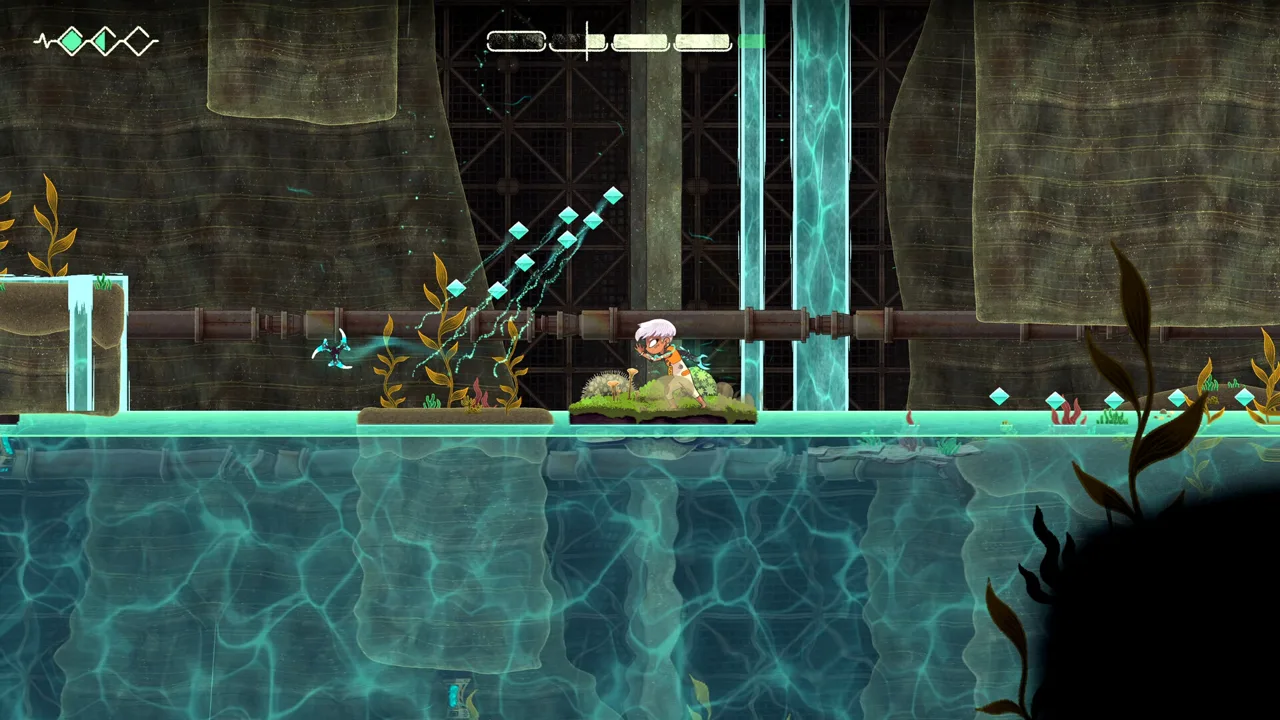
How the Echo Weaver time loop works
The world resets, but your next attempt can begin with a better plan. The Echo Weaver time loop turns discoveries into progress, letting you carry useful knowledge into a world that returns to its starting state. Understanding the Echo Weaver time loop helps you decide whether to spend a run exploring, practicing a route, or putting a clue to work.
You play as the last Weaver, exploring an interconnected world with an alien glaive and powers whose possibilities you must uncover. The central challenge is learning how to use what you already have while managing the time available to act.
Each loop begins with one minute on the clock. Collecting time crystals extends your available time, allowing a run to continue for several minutes depending on how much you gather. When time runs out, the loop restarts.
That short opening window makes your starting route consequential. A good approach is to learn a repeatable path to accessible time pickups before committing to a distant mystery. The purpose is to create room for exploration without spending every opening improvising.
Time is also a resource you spend
Extending the timer is only part of the system. Healing competes with keeping the loop going, and the game's broader design also lets you use time for trading, opening routes, and other interactions.
| Time mechanic | What it does | Planning consideration |
|---|---|---|
| Starting allowance | Each loop begins with one minute | Give your opening route a clear purpose |
| Time crystals | Extend the loop | Learn where accessible pickups fit into your route |
| Healing | Uses crystals that could support your time budget | Consider the health you need for the next obstacle |
| Other time spending | Supports trading, opening routes, and more | Allow room for costs beyond travel |
There is no single fixed total loop length stated here beyond the one-minute starting allowance. Your collected time and spending decisions shape how much you can accomplish.
A useful question before taking a detour is: What could this teach me, and can I afford the trip? Even an unfinished expedition can provide a route, timing clue, or technique worth using later.
Official source: Echo Weaver (store.steampowered.com)
What survives a reset?
The Echo Weaver time loop separates the world's temporary condition from the Weaver's lasting knowledge. A wall you broke can return, while your understanding of the passage behind it remains.
 Image: Steam / Moonlight Kids
The Weaver remembers across loops, and the game supports that premise through persistent knowledge tracking. Its progress screen records discoveries, while saved information includes the loop count, abilities encountered, and characters spoken to.
That distinction matters when measuring progress. Reaching a new location and learning how to return efficiently can be valuable even if the next reset restores obstacles along the way.
| Discovery or change | Behavior across loops | What it means for exploration |
|---|---|---|
| A broken shortcut wall | The wall returns after a reset | Remember how to reach and reopen it |
| Knowledge recorded on the progress screen | Persists | Review discoveries when choosing another lead |
| Records of abilities encountered and characters spoken to | Persist | Your discovery history survives the reset |
| Foreground art hiding some frequently revisited areas | Remains faded after discovery | Certain known passages stay easier to recognize |
The visual exception deserves attention. Revealing a hidden area causes foreground artwork to fade, and the developers made that fading permanent in areas players revisit most frequently. This helps keep familiar secrets readable. It does not establish that every concealed area receives the same treatment.
Likewise, a persistent record of speaking to someone does not mean every interaction or relationship change remains intact. Keep the memory of an encounter separate from its immediate effect on the world.
A good habit is to distinguish two outcomes after exploration: what you changed during the run, and what you learned for future runs. If you opened a wall, the opening is temporary. If you identified a shorter approach to that wall, you have information you can use again.
Why secrets replace traditional upgrades
Echo Weaver describes its progression as a metroidbrainia: exploration advances through understanding. The world is open from the beginning, with no traditional ability gates. Its powers are already available, although you must discover how to use them.
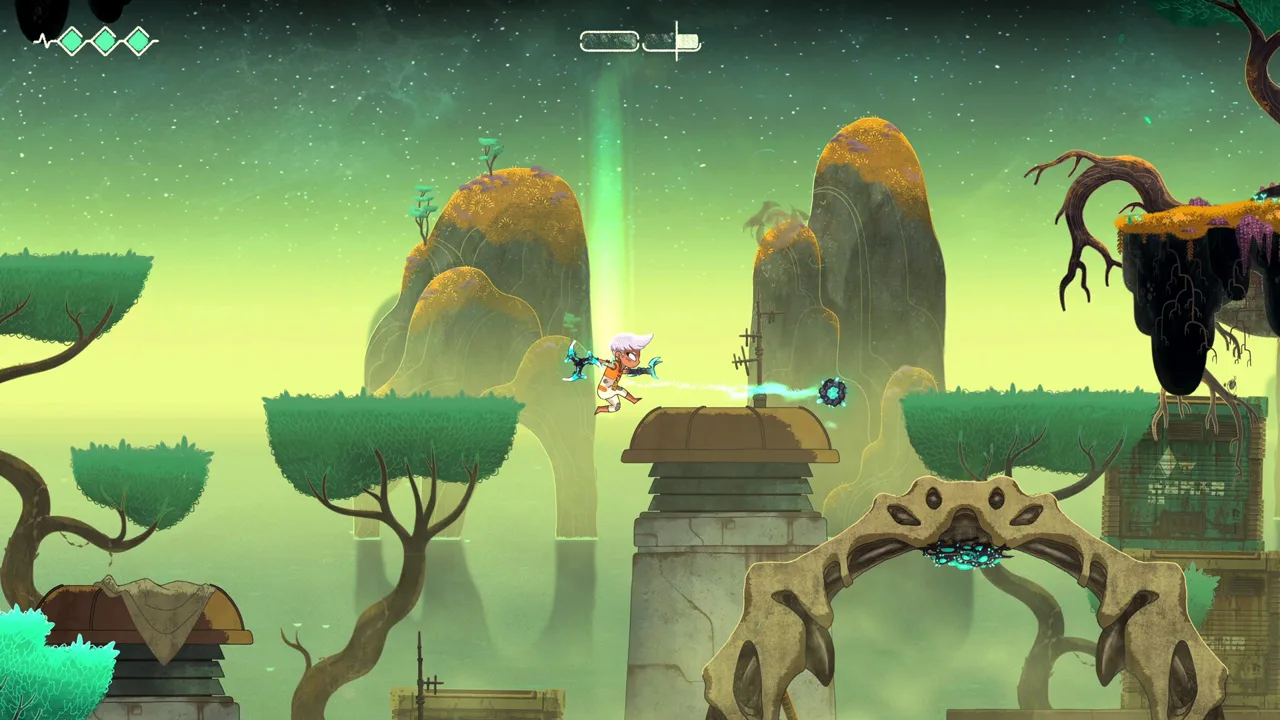 Image: Steam / Moonlight Kids
This changes how you should approach an apparent dead end. Rather than assuming you need to collect a later upgrade, a good approach is to reconsider your techniques, the environment, and any relevant clues.
The glaive is central to that process. It grants reality-bending powers, and the loop gives you repeated opportunities to learn their applications. A discovery can change your options without adding a new piece of equipment.
| Exploration element | Established mechanic | A useful response |
|---|---|---|
| Ability access | Powers are already at your disposal | Investigate techniques before assuming an upgrade is missing |
| Obstacles | Glaive powers can provide ways past them | Experiment with applications suggested by your discoveries |
| Concealed passages | Routes can be hidden by foreground artwork | Reconsider familiar spaces after finding another entrance |
| Progression | Knowledge expands what you can accomplish | Revisit unresolved obstacles with a specific new idea |
The Echo Weaver time loop makes practice part of progression. If you discover a technique but struggle to apply it consistently, dedicating a run to that technique is a reasonable strategy. You can then bring greater control into a longer expedition.
Revisit with a question
Backtracking becomes more productive when it tests something concrete. Before returning to an obstacle, identify what has changed in your understanding.
For example, you might revisit a passage after recognizing its other end, or reconsider an obstacle after discovering another use for the glaive. These are planning examples rather than solutions to particular puzzles.
Avoid treating every unexplained barrier as a reflex challenge. The game's stated emphasis is rhythm and routing, so observation and a revised approach deserve attention alongside execution.
Reading bells, schedules, and hidden shortcuts
The timer displays time in minute-sized chunks called bells. Each bell represents one minute, replacing the earlier design's second-by-second countdown.
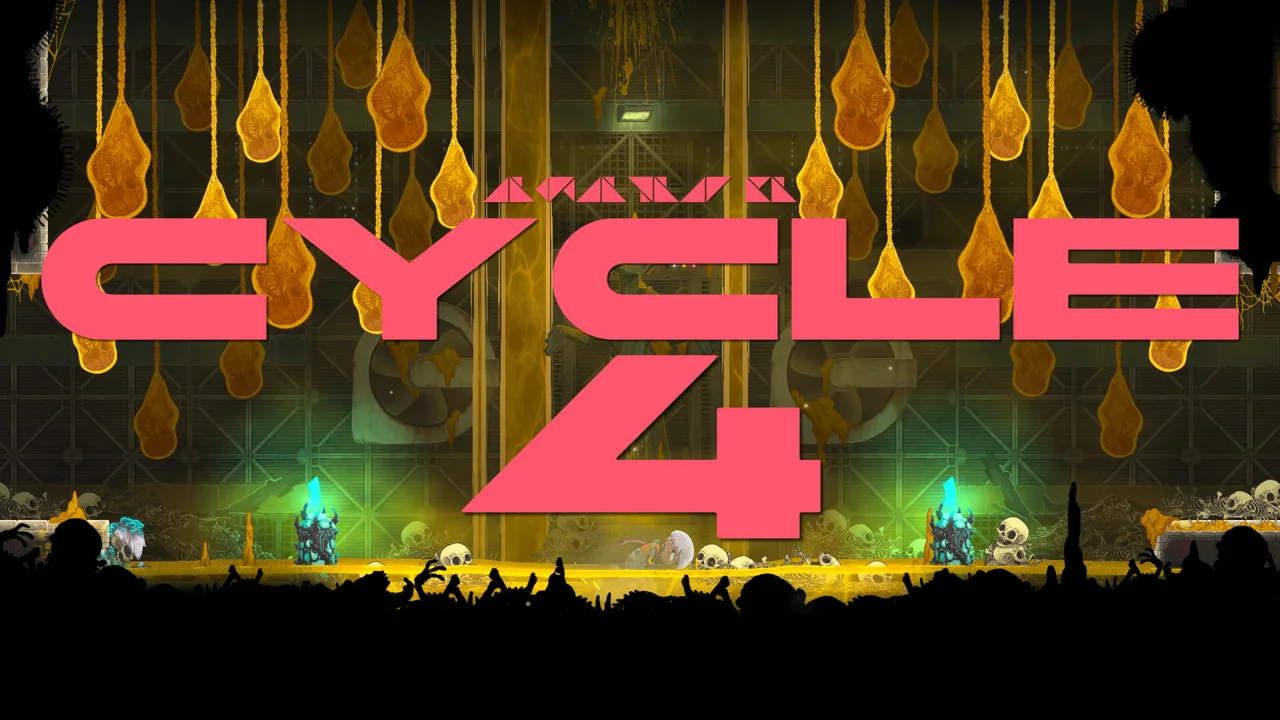 Image: Steam / Moonlight Kids
Bells also connect the clock to the world. NPCs use them when discussing timing, and nearly everything in the environment is arranged around these minute-long beats. A schedule clue can therefore tell you more than where to go: it can help you decide when to arrive.
In the Echo Weaver time loop, timing and navigation work together. Knowing a destination is useful; knowing a shorter route that gets you there at the relevant bell gives that discovery a practical purpose.
A good approach is to record three pieces of information when an encounter depends on timing:
- Where the encounter happens.
- Which bell or timing condition the dialogue identifies.
- Which known route could get you there with enough time available.
Use the timing actually given in the game. There is no need to invent a precise second count for a system communicated through bells.
Shortcuts have different purposes
Some shortcuts provide a benefit within the current loop. Breaking a wall may simplify movement for the remaining time, but the reset brings that wall back.
Other connections rely on concealment. A passage can be hidden behind artwork at one end and easier to spot from the other. Discovering it changes your understanding of the map, even when the surrounding world resets.
This makes return trips worth observing. A good tip is to examine how a newly discovered area connects to places you already know. The route you used to enter may not be the only useful connection.
When choosing a shortcut, consider the whole trip. A route that looks shorter may still demand an obstacle interaction or time expenditure. Favor a path you understand well enough to fit into the encounter you are planning.
How to make each loop more useful
A productive run needs a manageable objective. You might gather information, practice movement, or combine discoveries into a route toward a specific encounter. Trying to solve every open mystery at once can make it harder to recognize what you learned.
The developers observed players creating optimized opening routes that collected substantial amounts of time near the start of a loop. Building your own repeatable opening is a sensible goal, but it can develop gradually as you learn the map.
| Loop focus | Suggested objective | Useful information to bring forward |
|---|---|---|
| Opening route | Practice reaching familiar time pickups | A more dependable start |
| Exploration | Investigate an unresolved passage | Connections, obstacles, or clues |
| Technique practice | Test a discovered glaive application | A clearer understanding of its use |
| Schedule planning | Approach an encounter using its stated timing | A route matched to the relevant bell |
| Combined attempt | Connect known routes and interactions | Where the plan needs adjustment |
Build a repeatable opening
Start with pickups and paths you already understand. A good approach is to improve that opening as new discoveries give you better options. Predictability gives you a clearer basis for planning the unfamiliar part of a run.
Reserve time for interactions
Travel is only one demand on the clock. Because time can also support healing, trading, and opening routes, consider what you need to do after arriving.
A route that reaches a destination with little time remaining may need revision if the intended interaction requires spending more.
Learn from the point where a plan breaks
When a run falls short, identify the specific problem. Did you misunderstand a connection, need healing, or approach a scheduled encounter at the wrong time?
Then give the next loop an objective that addresses that problem. The Echo Weaver time loop rewards carrying discoveries forward; a useful next attempt begins by applying one of them.
FAQ
How long is the Echo Weaver time loop?
Every loop starts with one minute. Time crystals extend that allowance, and runs can last several minutes depending on collected time. Spending resources on healing and other actions also affects your available budget.
Do you lose all progress when the loop resets?
No. The world resets, but the Weaver retains knowledge. The game preserves discovery tracking, including records of abilities encountered and characters spoken to. Temporary changes, such as breaking a shortcut wall, can reset.
Do you need to unlock abilities before exploring?
Echo Weaver has no traditional ability gates. Its powers are available from the beginning, but discovering how to use them is part of progression. Knowledge determines how effectively you can explore.
What are bells in Echo Weaver?
Bells are the game's minute-long units of time. The HUD displays these chunks, and NPCs use the term for schedules. Learning relevant bells helps you coordinate routes and encounters.
Continue with
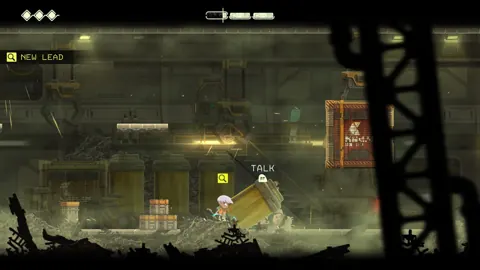 Echo Weaver gameplay: Time Loops, Secrets, and TipsExplore Echo Weaver gameplay, from time loops and glaive puzzles to movement and lasting discoveries. Learn how to plan routes and make each reset count.
More in Mechanics
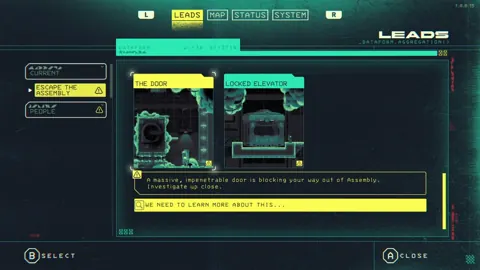
Echo Weaver glaive powers: Teleportation and Combat
Learn how Echo Weaver glaive powers support teleportation, combat, and lock interactions. Plan smarter routes and use the time loop to practice your moves.
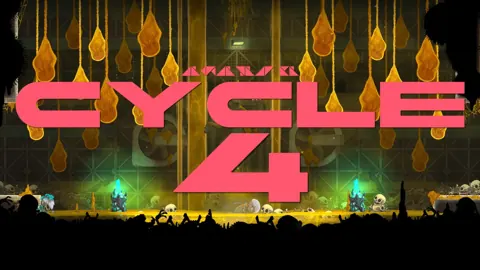
Echo Weaver metroidvania game: Time Loop Mechanics
Explore the Echo Weaver metroidvania game with a spoiler-light guide to time loops, knowledge-based abilities, glaive movement, and smarter route planning.
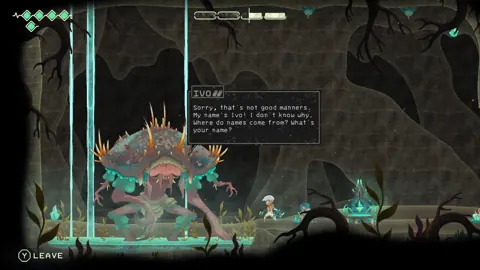
Echo Weaver progression: Master Secrets and Time Loops
Learn how Echo Weaver progression works, what survives each reset, and how secrets, movement, and smarter routes help you make the most of every time loop.
Join the community
Official channels for news, updates and player help: