
Echo Weaver metacritic: Scores, Reviews, and Verdict
Explore Echo Weaver metacritic scores, critic reviews, and gameplay details to decide whether its time loops and knowledge-based progression suit you.
Jump to
Echo Weaver’s Metacritic Score at a Glance
A promising review score can get your attention, but Echo Weaver’s unusual approach to exploration deserves a closer look. The Echo Weaver metacritic listing shows an 82 Metascore as of October 10, 2026, giving players an encouraging starting point when weighing a purchase. Understanding the Echo Weaver metacritic breakdown matters because the praise centers on discovery and movement, while the reservations involve navigation, complexity, and occasional platforming frustration.
Developed by Moonlight Kids and published by Akupara Games, Echo Weaver launched on October 8, 2026. Its early reviews describe a Metroidvania built around learning what your character can already do and applying that knowledge inside a repeating time loop.
Here is the score snapshot:
| Metric | Status on October 10, 2026 |
|---|---|
| Displayed Metascore | 82 |
| Metacritic classification | Generally Favorable |
| Reviews in the displayed critic panel | 4 |
| Positive reviews in that panel | 4, representing 100% |
| Mixed or negative reviews in that panel | 0 |
| User score | tbd |
| User ratings shown | 0 |
| Initial release date | October 8, 2026 |
The small review count deserves attention. Four positive reviews establish a favorable early reception, but they leave room for the aggregate to change as additional coverage arrives.
There is also a count difference within the listing: the main critic panel says four reviews, while the All Platforms area shows five critic reviews alongside an 82 score. Those figures belong to different displayed sections and should not be treated as interchangeable.
For anyone checking Echo Weaver metacritic before buying, the useful takeaway is straightforward: critics are responding positively, but the available user section does not yet provide a player-rating comparison. A pending user score means the rating is unavailable; it does not indicate dissatisfaction.
What the Reviews Praise—and Where They Push Back
The Echo Weaver metacritic score becomes more useful when you look at the reasons behind it. Reviewers repeatedly praise the central idea: exploration changes as you understand movement techniques, shortcuts, and the world’s timing.
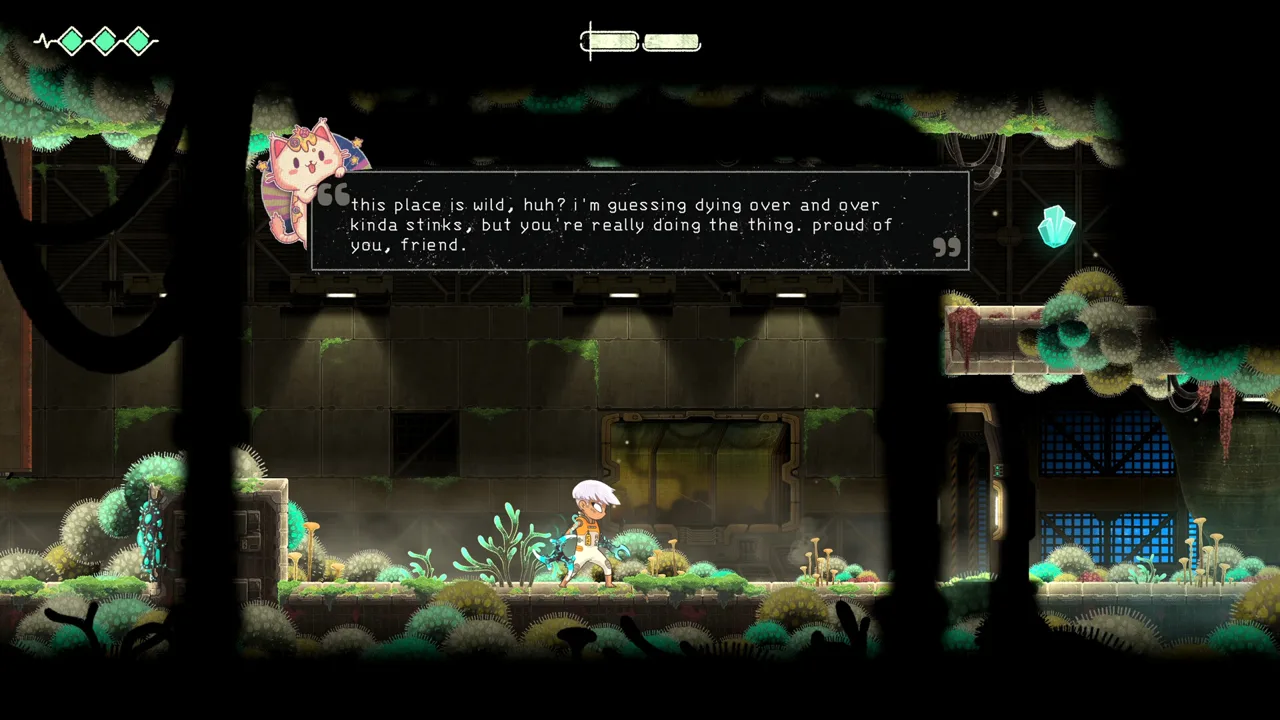 Image: Steam / Moonlight Kids
Their reservations are equally relevant. The same interconnected design that creates satisfying discoveries can make it difficult to decide where to go next.
| Outlet | Published score | Main praise | Reported reservation |
|---|---|---|---|
| GamingTrend | 80/100 | Compelling concept and unusual gameplay ideas | Some design choices keep the experience from reaching excellence |
| GameBlast | 80/100 | Story integration, dynamic loops, and accessible discovery tracking | Numerous techniques and connections can become difficult to follow |
| Game Informer | 78/100 | Strong discovery and rewarding trust in the player | Aimless wandering and occasionally unfair-feeling platforming |
| Polygon | No numerical score displayed | Creative, carefully constructed exploration | Some frustration |
| Noisy Pixel | 9.5/10 in its separate video review | Movement, ability discovery, narrative, and replay appeal | Some abilities remain gated during the early tutorial |
Noisy Pixel’s 9.5/10 is a separate review score. It should not be presented as Echo Weaver’s Metascore or assumed to contribute to the displayed aggregate.
Polygon’s entry also needs careful reading. Its review text is present, even though the listing shows no numerical score. That is different from an outlet having no review.
Across these assessments, the recurring attraction is the moment when new information transforms a familiar location. A route that previously looked impossible may become usable once you understand a technique. Returning to an area can therefore involve a different plan, even when the environment itself is familiar.
The criticism helps explain the kind of patience this structure asks from you. If you enjoy connecting clues and experimenting with routes, the reviews describe plenty to investigate. If unclear objectives quickly wear you down, pay particular attention to the comments about wandering and accumulated complexity.
An 82 summarizes reception. It cannot tell you how comfortable you will feel while searching for the next useful insight.
Why Knowledge Changes the Metroidvania Formula
Echo Weaver calls itself a “metroidBRAINia,” emphasizing knowledge as the engine of progression. Its Steam description presents secrets as upgrades: understanding an ability or interaction gives you new ways to navigate the world.
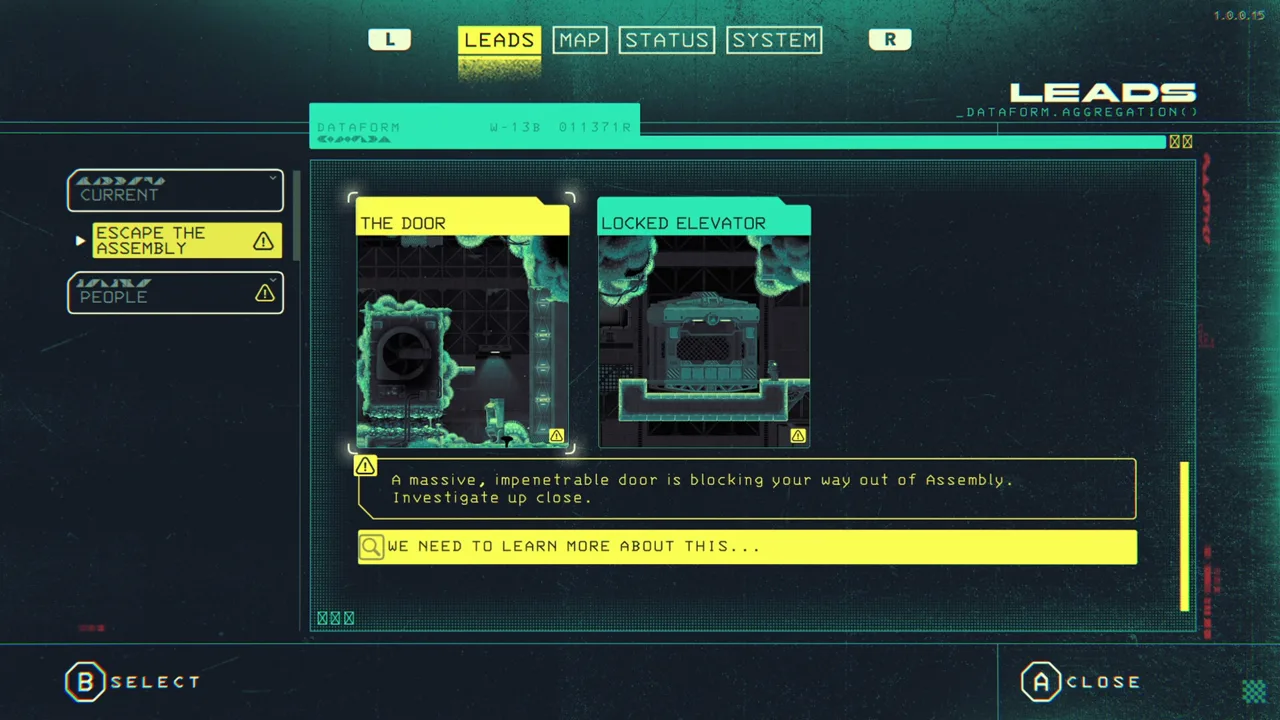 Image: Steam / Moonlight Kids
That distinction explains much of the enthusiasm behind the Echo Weaver metacritic reception. The appeal comes from discovering possibilities that were previously invisible to you.
Noisy Pixel compares the concept to learning the wall jump in Super Metroid. The memorable part of that example is realizing that a movement option already exists, then reconsidering earlier obstacles through that discovery.
Echo Weaver extends that principle across its exploration. The alien glaive bound to your character has unusual powers, and learning how to use them opens opportunities to bypass obstacles and find shortcuts.
| Design element | How Echo Weaver uses it | Why it affects exploration |
|---|---|---|
| Ability discovery | Learning reveals techniques and powers | Existing spaces can suggest new routes |
| Repeating time loop | The world resets while you keep applying what you have learned | Later attempts can follow a revised plan |
| Time as a resource | Time can be extended and spent on healing, trading, and opening routes | Route planning involves resource decisions |
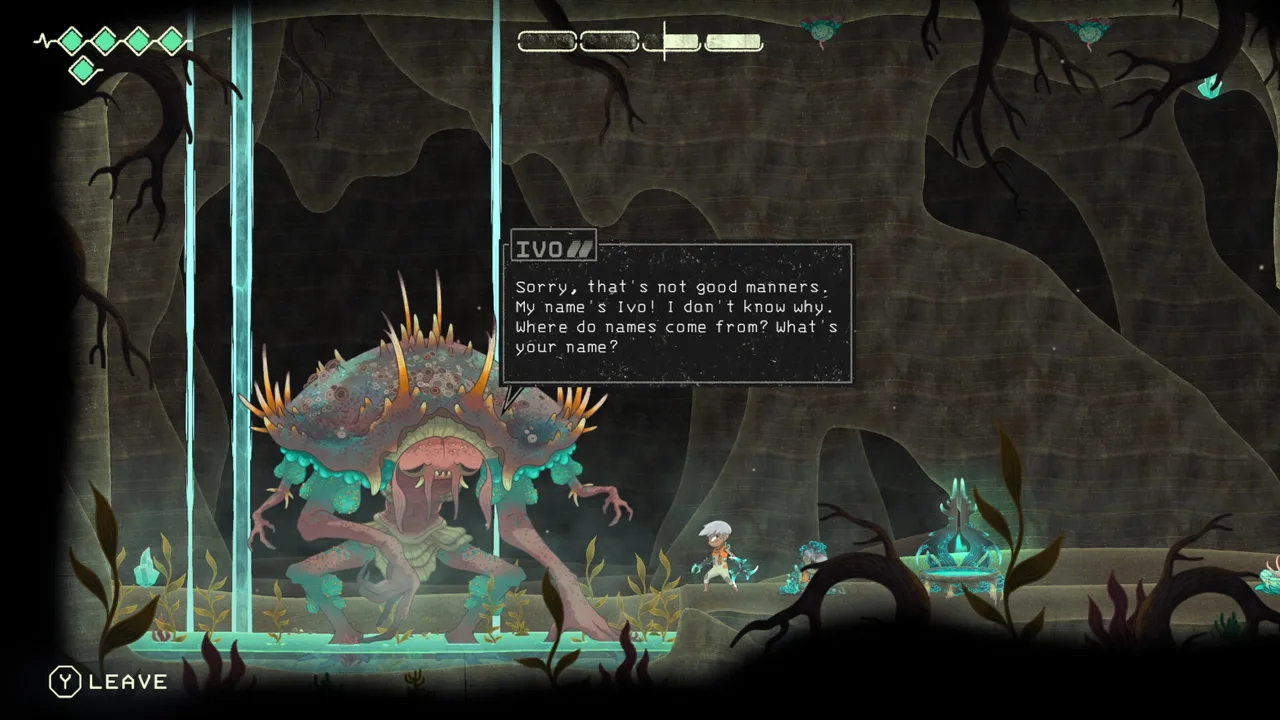
| Character encounters | Residents offer information about the world and its mysteries | Conversations can inform your next objective |
| Time trials | Challenges test movement execution and route planning | Familiar terrain becomes a navigation problem |
The broad knowledge-based premise has an early-game qualification. Noisy Pixel reports that some abilities are locked until the tutorial section is completed, even during a repeat playthrough. The review describes that restriction as brief, but it means “everything is immediately available” would be too absolute.
For a new player, a good approach is to treat unexplained barriers as questions. A blocked path might be connected to movement knowledge, timing, or information found elsewhere. Keep it in mind as your understanding grows.
Spoiler restraint also has practical value here. Because discovering techniques is part of progression, reading a complete ability explanation can remove the puzzle attached to that discovery. If you want to preserve those moments, start with narrower hints when you get stuck.
Time Loops, Movement, and Practical Exploration Tips
Echo Weaver’s time loop provides both a limit and a reason to refine your route. According to Noisy Pixel’s review, loops cannot be extended beyond 13 minutes. Crystals found around the map can add time, and some collectibles increase the time available at the beginning of subsequent loops.
 Image: Steam / Moonlight Kids
The review also describes unlimited attempts. You can return with a different plan after a reset, whether your previous attempt revealed a shortcut, taught you a technique, or clarified when a door closes.
That does not guarantee the timer will feel relaxing. Noisy Pixel enjoyed the short loops and did not find them especially stressful, while acknowledging that players who dislike strict limits may struggle with the structure.
The Echo Weaver metacritic reviews suggest that managing information can be as important as managing movement. A good approach is to give each attempt a specific question.
| Situation | A useful approach |
|---|---|
| Several leads are competing for your attention | Pick one lead to investigate during the next loop |
| A destination seems too far away | Reconsider known shortcuts and movement techniques |
| A route changes with the loop’s timing | Observe when the relevant passage becomes unavailable |
| You learn a new technique | Revisit a barrier that may interact with it |
| You lose track of discoveries | Review the quest and lead information before choosing a route |
These are planning suggestions, rather than a required sequence. The game’s connected structure leaves room for experimentation.
Movement receives particularly strong praise from Noisy Pixel. The review describes controls that combine precision with a sense of weight, then become more satisfying as additional techniques are understood. Later movement includes slingshotting and sliding for speed, though discovering the details is part of the experience.
Time trials provide another way to use that knowledge. They challenge both your execution and your choice of route. If a trial feels awkward, a good approach is to examine the path as well as your inputs: the review identifies planning as part of the challenge.
Because time can also be spent on healing, trading, and opening routes, the loop is more than a countdown. Consider what your intended task requires before committing to a long journey. A route that gets you somewhere quickly may still need enough remaining time for the interaction you planned.
Story, Replay Appeal, and the Purchase Decision
Echo Weaver follows the last Weaver through the remains of a ruined society. The mystery involves the Congregation, a failed utopian project, and the circumstances behind the repeating loop.
A companion named Intrepid helps track the threads you pursue. Other encounters introduce survivors with their own perspectives, while glimpses into the past provide additional context.
Noisy Pixel praises how those characters connect practical information gathering with emotional investment. Learning more about someone can help you understand the world while also giving you a reason to care about their situation.
For readers browsing Echo Weaver metacritic, that narrative connection helps explain why the reviews discuss more than clever platforming. Discovering a route, understanding a character, and piecing together the setting can support the same larger mystery.
Replay appeal follows naturally from the knowledge-driven design, though reviewers differ in their immediate interest. Noisy Pixel started another playthrough and wanted to experiment with more efficient loops. Game Informer found the prospect of returning with extensive ability knowledge appealing, while expressing less urgency to replay.
Neither assessment establishes a guaranteed completion time or a fixed amount of replay value. The supported attraction is the opportunity to approach familiar tasks with greater understanding.
Before deciding, consider these questions:
- Do you enjoy figuring out systems through clues and experimentation?
- Are you comfortable revisiting locations with a revised plan?
- Does a repeating timer sound engaging or distracting?
- Do you enjoy improving movement and route efficiency?
- How much tolerance do you have for periods of uncertain direction?
The Echo Weaver metacritic score supports taking a closer look, especially if its discovery-driven premise interests you. The individual reviews make the decision more concrete by identifying both the rewards and the friction.
For a practical next step, visit Echo Weaver’s Steam store page. The listing includes a demo and full controller support. Trying the demo is a useful way to judge your response to the movement and loop structure before purchasing.
FAQ
What is the Echo Weaver metacritic score?
As of October 10, 2026, Echo Weaver has a displayed Metascore of 82, classified as Generally Favorable. The main critic panel lists four reviews, while the All Platforms section displays five critic reviews alongside an 82 score.
Does Echo Weaver have a Metacritic user score?
The user score is tbd in the October 10 snapshot. The page shows zero user ratings and says a user score becomes available after four ratings. There is no numerical user score to compare with the critic aggregate yet.
How long is an Echo Weaver time loop?
Noisy Pixel’s review reports a maximum loop length of 13 minutes. Collectible crystals can extend time, and some collectibles increase the starting time for future loops. Thirteen minutes is the cap, rather than the stated starting duration of every loop.
Is Echo Weaver entirely based on knowledge rather than upgrades?
Knowledge is central to its progression: learning techniques and understanding the world creates new possibilities. However, Noisy Pixel reports that some abilities remain locked until the tutorial is completed, so the premise includes an early-game restriction.
Continue with
 Echo Weaver review: Smart Secrets, Demanding Time LoopsThis Echo Weaver review explores knowledge-based upgrades, time loops, tough platforming, and replay appeal. See whether its mysteries suit your playstyle.
Join the community
Official channels for news, updates and player help: